
On Sunday, February 28, 2027, a half-day of complimentary Tutorials & 101 Lectures will kick off AWE-1. 101 Lectures are intended to introduce first-time users to basic ellipsometry concepts. Tutorials are intended for distinguished lecturers to teach a variety of ellipsometry fundamentals, more advanced concepts in instrumentation and data analysis, as well as more specialized applications.
Tutorials
Gerald E. Jellison
Oak Ridge National Laboratory
Tutorial Working Title: ellipsometry 101, matrices, etc.
Gerald E. (Jay) Jellison, Jr. grew up in a small mill town in Maine and attended Bowdoin College, graduating in 1968 with a major in physics. He then completed a 7-month Fulbright Fellowship in Germany and served 2 years in the U.S. Navy before attending graduate school at Brown University. He got his PhD in 1976 using NMR to study local order in borate glasses. He then did a post-doc at the Naval Research Lab, where he used pulsed NMR to characterize amorphous semiconductors. In 1978, Jay became a staff scientist in the Solid State Division of Oak Ridge National Laboratory. Jay’s early work focused on laser interactions with semiconductors and the application to photovoltaics.
In the early 1980s, Jay began a fruitful collaboration with Frank Modine, where they built several ellipsometers based on photoelastic modulators. The early versions were complete for isotropic materials, measuring N, S, and C simultaneously, while later versions also measured all the cross-polarization components. Simultaneously, Jay became interested in ellipsometry data analysis and, in 1996, published the Tauc-Lorentz model, which parameterizes the optical functions of amorphous materials.
In 2003, Jay began a collaboration with John Hunn to create the two-modulator generalized ellipsometry microscope (2-MGEM), a near-normal-incidence instrument used to characterize the inner pyrocarbon layer of TRISO nuclear fuel. This is now a characterization requirement of the Nuclear Regulatory Commission (NRC) for nuclear fuel to be qualified to be used in nuclear reactors.
Jay retired from ORNL in 2014 but continues to work part-time, primarily in the nuclear fuel program, where one focus is on using the 2-MGEM and other techniques to study industrial graphite. Another interest is the use of Mueller matrix ellipsometry to determine the optical functions of anisotropic crystals. He loves doing science and interacting with scientists of all ages.

New Mexico State University
Tutorial Working Title: contributions of interband electronic transitions to the dielectric function
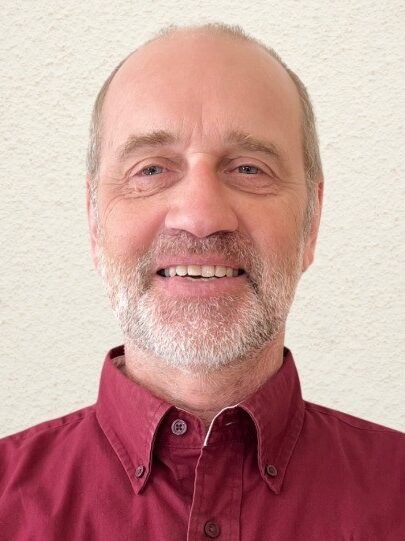
Stefan Zollner received his B.S. (1983) in physics from the Universität Regensburg, and his M.S. (1987) and Ph.D. (1991) in physics from the Universität Stuttgart and the Max-Planck-Institut für Festkörperforschung, all in Germany. After a postdoctoral year at the IBM Research Division in Yorktown Heights, NY, and a five-year appointment at Iowa State University and the Ames Laboratory (US-DOE), he worked for 15 years as a semiconductor engineer in metrology and process integration at Motorola, Freescale, and IBM. Since 2010, he has been the Head of the Department of Physics at New Mexico State University in Las Cruces, NM. His research interests include precision measurements of temperature-dependent optical constants using spectroscopic ellipsometry and their interpretation to determine basic properties of solids; ultrafast processes in semiconductors using femtosecond pump-probe laser spectroscopy; and the development of novel materials for applications in microelectronics and optoelectronics. He authored ~200 peer-reviewed journal articles, and is a Fellow of the American Physical Society and the American Vacuum Society, and an IEEE Senior Member.
J.A. Woollam Co., Inc.
Tutorial Working Title: Modeling Infrared & THz Ellipsometric Data – Substrates, Films, Powders & Liquids
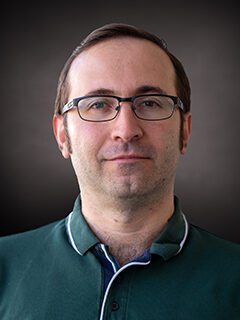
Tom Tiwald received an MSEE from the University of Nebraska in 1988. He then worked for Motorola Semiconductor Products in Austin, TX, where he measured trace contamination on silicon and other surfaces using SIMS and AES. In 1994, he returned to the University of Nebraska to pursue a Ph.D. His research involved applications of infrared ellipsometry in the areas of free carrier, phonon and vibrational absorptions in semiconductors, oxides, oils, polymers, and other materials. In 1999, Tom joined the J.A. Woollam Company as a member of the applications group. Since then, he has helped customers utilize ellipsometry for a wide range of applications, including infrared optical materials, optical properties vs. temperature measurements, as well as liquid cell, in situ, and web coating process monitoring and control. He has also trained new customers in how to use their instruments and perform data analysis. Over the years, Tom has helped develop and present dozens of data-analysis short courses. In recent years, he has presented several internet-based short courses devoted to the analysis of Infrared, UV, and visible ellipsometric data.

Pennsylvania State University
Tutorial: Advancing Electromagnetic Modeling Beyond Effective Medium Approaches for Linear and Nonlinear Optics and Photonics
Christos Argyropoulos received the Diploma degree from the Aristotle University of Thessaloniki, Greece, in 2006, the M.Sc. degree from the University of Manchester, U.K., in 2007, and the Ph.D. degree from the Queen Mary University of London, U.K., in 2011. During 2011-2013, he was a Post-Doctoral Fellow with the University of Texas at Austin, USA. In 2013-2014, he was a Post-Doctoral Associate with the Center for Metamaterials and Integrated Plasmonics, Pratt School of Engineering, Duke University, USA. In 2014, he became an Assistant Professor with the Department of Electrical Engineering, University of Nebraska–Lincoln, USA. He was promoted to Associate Professor in the same institution and granted tenure in 2020. In 2018, he was appointed Visiting Professor at the Centre de Recherche Paul Pascal, CNRS, and University of Bordeaux, France. He was also appointed to be a 2017 Summer Faculty Research Fellow at Naval Research Laboratory, Washington, DC, USA. In 2023, he became an Associate Professor with tenure in the Department of Electrical Engineering at Pennsylvania State University, where he established and currently leads the Metamaterials, Plasmonics, and Nanophotonics Lab. He also serves as College of Engineering Liaison to the Penn State Applied Research Laboratory. He has published over 390 technical papers in highly ranked journals and referred conference proceedings. His research interests lie primarily in the broad areas of electromagnetics, optics, and photonics, both theory and experiments. He has been the recipient of several international awards and recognitions for his research studies, such as the 2023 EurAAP Leopold B. Felsen Award for Excellence in Electrodynamics, 2019 Office of Naval Research (ONR) Young Investigator Award, 2017 URSI Young Scientist Award, and 2013 IEEE APS Junior Researcher Award. He is an elected Fellow of OPTICA, SPIE, and IEEE. His research work led to receiving major funding by ONR (YIP, DURIP), NSF, NASA, NIH, NSF EPSCoR, DOE, and several other funding sources. Currently, he is serving as Associate Editor in IEEE Antennas and Propagation Transactions and EPJ Applied Metamaterials. In the past, he held multiple editorial positions in Optics Express, Advanced Electromagnetics, Forum of Electromagnetic Research Methods and Application Technologies, and special issues in APL Materials and Optical Materials Express.
101 Lectures
J.A. Woollam Co., Inc.
101 Lecture: Introduction to Ellipsometry for First-Time Users
James Hilfiker graduated from the Electrical Engineering Department of the University of Nebraska in 1995, where he studied under John Woollam. His graduate research involved in-situ ellipsometry applied to both sputter deposition and electrochemical reactions, and optical characterization of magneto-optic thin films. He joined the J.A. Woollam Company upon graduation, where his research has focused on new applications of ellipsometry, including characterization of anisotropic materials, liquid crystal films, thin-film photovoltaics, and Mueller matrix optical characterization. He has authored over 50 technical articles involving ellipsometry, including Encyclopedia articles and four book chapters on topics as varied as Vacuum Ultraviolet Ellipsometry, In-Situ Spectroscopic Ellipsometry, and Dielectric Function Modeling. In 2015, he co-authored a book titled “Spectroscopic Ellipsometry: Practical Application to Thin Film Characterization.”

Film Sense LLC
101 Lecture: Introduction to In-Situ Ellipsometry
Blaine Johs is the President and Founder of Film Sense LLC, which manufactures Multi-Wavelength Ellipsometer systems. Prior to founding Film Sense in 2013, he was the Director of Research at the J.A. Woollam Company for 23 years. Blaine holds over 100 ellipsometry-related patents and has co-authored over 100 publications on ellipsometry applications, data analysis methods, and instrumentation.

Welcome Dinner
On Sunday, February 28, 2027, after a half-day of Tutorials & 101 Lectures, a Welcome Reception will be held in the hospitable atmosphere of Morrill Hall (Nebraska State Museum) to welcome our community of new and experienced ellipsometry learners.
The Welcome Reception is generously sponsored by our Silver Sponsor: _TBD_.