


From Monday through Wednesday, March 1–3, 2027, Oral and Poster Sessions will take place in the Conference Center on the Nebraska Innovation Campus, including an outstanding Keynote and a lineup of excellent Invited Speakers. The Keynote is intended to provide a high-level overview, summarizing developments in ellipsometry and related techniques over the past ~5 years, and looking ahead at a broad range of applications that will drive future advances. Invited Talks are intended to introduce advanced concepts in instrumentation and data analysis, as well as specialized applications, that are highly topical or emerging.
Please find the up-to-date Schedule of Events in the Abstract Book.
Keynote
KLA Corporation
Film and Critical Dimension Metrology Challenges in the Semiconductor Industry
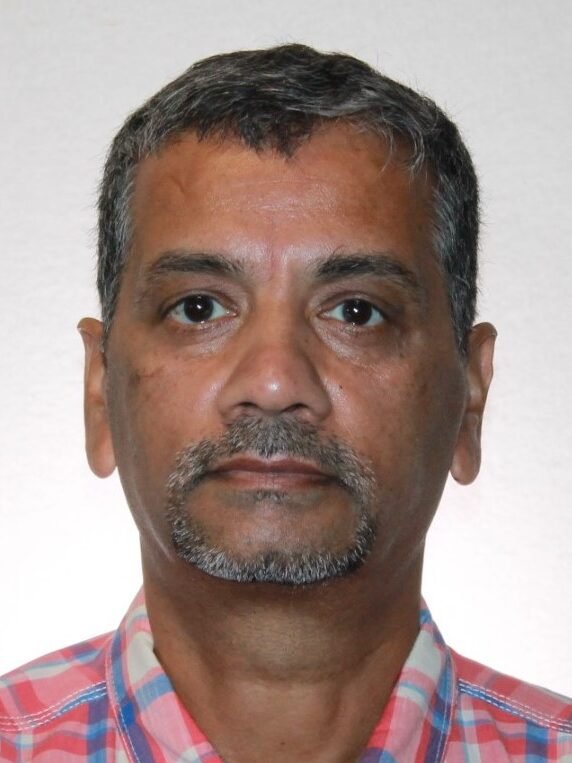
Shankar Krishnan received his Ph.D. from Rice University, where he developed novel spectroscopic ellipsometers to study high-temperature liquid materials. He was a Director and Principal Scientist at Containerless Research, Inc., where he developed a series of high-speed polarimeters and ellipsometers to study transient events on millisecond/microsecond timescales. Since 2001, he has worked at KLA Corporation, where he has led the development of numerous spectroscopic ellipsometers and reflectometers for film and critical dimension metrology. He currently serves as a KLA Fellow and Vice President of Engineering. He has published widely on spectroscopic ellipsometry and high-speed polarimetry, and holds over 110 patents.
Invited Speakers
Hiroyuki Fujiwara
Gifu University, Japan
Advances in Deep Learning-Based Spectroscopic Ellipsometry
Hiroyuki Fujiwara received his Ph.D. degree from the Tokyo Institute of Technology. He was a research associate at The Pennsylvania State University during 1996–1998. In 1998, he joined the Electrotechnical Laboratory of the Ministry of International Trade and Industry in Japan. Later in 2007, he became a team leader of the Research Center for Photovoltaics at the National Institute of Advanced Industrial Science and Technology (AIST) in Japan. He is currently a Professor in the Department of Electrical, Electronic, and Computer Engineering at Gifu University.

Argonne National Laboratory
In Situ Combination of Spectroscopic Ellipsometry and Calorimetry
Ashley Bielinski received her bachelor’s degree in Mechanical Engineering from the University of Minnesota, Twin Cities, in 2014; and her master’s and Ph.D. degrees in Mechanical Engineering from the University of Michigan in 2019. She currently works as an Assistant Materials Scientist at Argonne National Laboratory. Her research centers around atomic layer deposition, a surface synthesis technique that uses sequential surface reactions to deposit material onto a surface in a vacuum chamber. She developed a new technique for studying ALD reactions that combines in situ ellipsometry with calorimetry measurements. She was recognized with an NSF Graduate Research Fellowship 2015-2018, the Maria Goeppert Mayer Postdoctoral Fellowship 2019-2022, and the Physical Sciences and Engineering Early Investigator Named Award by Argonne National Laboratory 2022.

Brigham Young University
Multi-Instrument Characterization of Thin Films: How and Why Ellipsometry Matters
Matthew Linford graduated with a B.S. in Chemistry from Brigham Young University (BYU) in 1990 and received M.S. and Ph.D. degrees in Materials Science & Engineering and Chemistry, respectively, from Stanford University in 1996. After a Post-Doc at the Max Planck Institute of Colloids and Interfaces in Golm (previously Berlin), Germany, with Helmut Möhwald studying polyelectrolyte multilayers, he worked in industry for three years. In 2000, he took a position as a faculty member at BYU and is now a full professor. While at BYU, he has studied thin-film characterization using X-ray photoelectron spectroscopy and spectroscopic ellipsometry; statistical methods for data analysis; new materials for separations science (chromatography); thin-film deposition by atomic layer deposition and sputtering; new materials for long-term digital data storage; and the chemomechanical functionalization of silicon. He has more than 400 publications, which include peer-reviewed papers, conference proceedings, book chapters, peer-reviewed contributions to Surface Science Spectra, commercial application notes, tutorial articles, and more than 40 patents. In 2014, he became a Fellow of the American Vacuum Society (AVS).

Connie B. Roth
Emory University
Ellipsometry in Polymer Physics
Connie Barbara Roth received her B.Sc. in Physics from McMaster University (Ontario, Canada), and her M.Sc. and Ph.D. in Physics from the University of Guelph (Ontario, Canada). She completed postdoctoral positions at Simon Fraser University (British Columbia, Canada) and Northwestern University (Chicago, IL). She has been a faculty member at Emory University since 2007, receiving tenure in 2013, and was promoted to full professor in the Department of Physics in 2021. Her research falls under the area of Experimental Soft Matter Physics. Her research interests include polymer materials, glass transition, physical aging, photophysics, miscibility, and phase separation, with particular interest in surface and interfacial effects observed at the nanoscale in thin films, nanostructured blends, and nanocomposite materials, as well as other perturbations such as external stresses and electric fields. In 2016, she published an edited book on “Polymer Glasses” (CRC Press).
Anis Attiaoui
Stanford University
Spectroscopic Ellipsometry Across Length Scales: Quantum Confinement, Thermal Segregation, and Oxide Chemistry in Group-IV Heterostructures
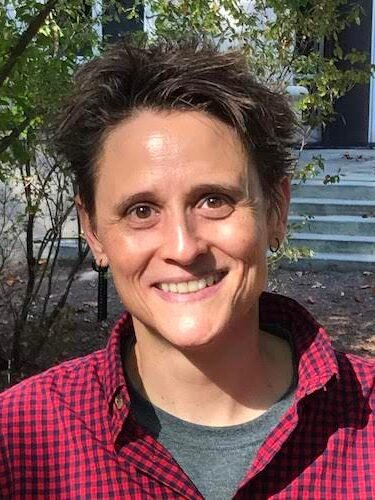
Anis Attiaoui obtained his Ph.D. in Physics Engineering from École Polytechnique de Montréal, Canada, in January 2023, conducting research under the supervision of Prof. Oussama Moutanabbir. He is currently a postdoctoral fellow in the Department of Materials Science and Engineering at Stanford University, where he works under the mentorship of Prof. Paul McIntyre. He specializes in the epitaxial growth of group-IV semiconductors via chemical vapor deposition and the optoelectronic characterization of materials, employing methods such as photoluminescence, photoreflectance, and absorption spectroscopy. He explores how short-range ordering affects the optical properties of semiconductor materials by integrating Extended X-ray Absorption Fine Structure analysis with photoluminescence spectroscopy. He is also leading a project at Stanford focused on creating innovative two-dimensional metasurfaces designed to enhance light emission and absorption in the near-infrared to mid-infrared spectral regions, utilizing group-IV semiconductor nanowires.

Onto Innovation
Optical Critical Dimension Metrology with Spectroscopic Ellipsometry: The Workhorse of Process Control in Advanced Nodes
Chung-Hwa Wang received his Ph.D. from National Tsing Hua University in Taiwan. In 2013, he worked at Nanometric Inc, where he developed novel spectroscopic ellipsometers and metrology solutions for customers’ leading-edge process technologies. He currently serves as the head of an application engineering team at Onto Innovation. He led the development of metrology solutions on numerous spectroscopic ellipsometers, reflectometers, acoustic and X-ray metrology for film and critical dimension metrology in industry.

Catering during Session Breaks
Coffee & Snacks will be served during Oral Session breaks Sunday through Wednesday, sponsored by _TBD_.
Lunches will be served on Monday and Tuesday, sponsored by _TBD_.
Refreshments will be served during the Poster Session on Monday evening, sponsored by _TBD_.